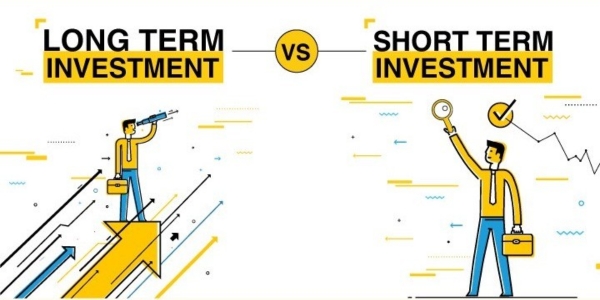
Investing means putting your money to work so it can grow instead of just sitting in a bank account.
When it comes to long term vs short term investment, the main question people face is:
Do you want (or need) the money back soon? → Short-term investing
Or are you okay waiting many years for potentially much bigger growth? → Long-term investing
Let’s break it down in the simplest way, like explaining it to a friend over coffee.
Short-Term Investing – I might need this money soon
- Timeframe: Usually a few months to 3–5 years (often under 3 years).
- Main goal: Keep your money safe and easy to get back quickly. You accept smaller growth to avoid big losses.
- Typical examples:
- High-yield savings account
- Certificates of deposit (CDs)
- Money market accounts
- Short-term government bonds or Treasury bills
- Like this analogy: Putting money in a safe piggy bank you can open anytime. It grows a little (maybe 2–5% per year right now), but you can grab it fast for a vacation, new phone, emergency, or house down payment.
- Pros:
- Very safe — low chance of losing money
- You can access it quickly without penalty
- Good when you know you’ll need cash soon
- Cons:
- Growth is small — often doesn’t beat inflation (prices rising) over time
- You miss out on bigger long-term gains
long term vs short term investment -I’m building wealth for the future
- Timeframe: 5–10 years or more (often 10–30+ years, like for retirement).
- Main goal: Grow your money a lot over time, even if it goes up and down along the way.
- Typical examples:
- Stock market index funds or ETFs (e.g., ones that follow the whole market like S&P 500)
- Individual good company stocks you hold for years
- Retirement accounts (like a pension plan, IRA, or 401(k))
- Real estate (if you buy and hold)
- Like this analogy: Planting an apple tree. It takes years to grow big, but once it does, you get lots of apples every year (compounding). Short dips (like bad weather) don’t kill the tree — it keeps growing.
- Pros:
- Historically much higher average returns (stocks have averaged ~7–10% per year over decades after inflation)
- Compounding magic: Your gains start earning gains → money grows faster the longer you wait
- You can ignore daily market ups and downs
- Often lower taxes on profits (if held over 1 year)
- Cons:
- Can drop a lot in bad years (20–50% sometimes) — scary if you look too often
- You shouldn’t touch it early, or you might lose money
- Requires patience
Quick Side-by-Side Comparison (Super Simple)
| Question | Short-Term Investing | Long-Term Investing |
|---|---|---|
| How long do you wait? | A few months to 3–5 years | 5–10+ years (often decades) |
| Risk of losing money | Low | Higher in short periods, but lower over time |
| Typical yearly growth | 2–6% (safe options) | 7–10% (stocks over long periods) |
| Best for | Emergency fund, car, vacation, house down payment | Retirement, kids’ education, big wealth building |
| Stress level | Low (stable) | Medium (ignore daily ups and downs) |
| Main danger | Money may not grow enough vs. rising prices | Selling in panic during a market drop |
Real-Life Examples
- Short-term: You want to buy a car in 2 years → Put money in a high-yield savings account or short CD so it’s safe and earns a bit.
- Long-term: You’re 30 and saving for retirement at 65 → Put money every month into a low-cost stock index fund and leave it alone for 35 years → compounding turns small amounts into a lot.
- Mix both (most smart people do this): Keep 3–12 months of living expenses in short-term safe places → Put the rest in long-term Investment growth.
Bottom Line — The Easy Choice Rule
- If you need the money in less than 5 years → Go short-term and keep it safe.
- If you can leave it for 5+ years → Go long-term for much better growth chances.
Most regular people build real wealth with long-term investing (patient, boring, but powerful), while using short-term only for money they’ll need soon.
Which one sounds more like your situation right now? Or do you have a specific goal in mind (like saving for something soon vs. far away)? I can make it even simpler for that